Search for cnlawblog and you will find a dozen pages that describe it in a dozen ways. Some call it a China law site. Some call it a law firm. One even lists litigation and contract review services.
Table of Contents
So we went to the source. We read the official site, its policy pages, its guest post rules, and its law section. This guide covers what CNLawBlog really is, what it publishes, which lookalike sites to avoid, and how to judge any article you find there.
What Is CNLawBlog?
CNLawBlog is an independent, free blog at cnlawblog.com. Its About page says it launched in August 2018 with a focus on legal writing. Today it covers law along with finance, technology, business, health, lifestyle, real estate, gaming and more.
It is not a law firm, a court, or a government website. It does not give legal advice. Its articles explain topics in general terms, so they work best as a starting point.
CNLawBlog at a Glance
Here are the basic facts we confirmed on the site in November 2026.
| Detail | What we found |
| Official address | cnlawblog.com |
| Type of site | Independent blog with many topics |
| Started | August 2018, per its About page |
| Cost to read | Free, no sign-up needed |
| Law sections | Accident, Civil, Corporate, Criminal, Family and Personal Injury law |
| Other topics | Technology, Finance, Business, Education, Health, Lifestyle, Real Estate, Travel, Automotive, Fashion, Politics, Sports and Gaming |
| Bylines | First names or usernames, such as Jamie and mansi |
| Guest posts | Accepted, with 1 to 2 dofollow links allowed |
| Legal advice | No |
| Archive size | 21 pages of posts on the homepage |
What Does CNLawBlog Publish?
Law is only one part of CNLawBlog. The name points to a law blog, but the homepage reads more like a general magazine with a law section.
Legal Articles
The law menu has six topic areas: accident, civil, corporate, criminal, family and personal injury law. Many posts focus on one US city or state. Recent examples cover fire damage claims in Texas, renter rights in Los Angeles, and DUI charges in Fort Lauderdale.
Non-Legal Articles
Most recent posts have nothing to do with law. Topics include online loan scams, Federal Reserve rate questions, Treasury yields, edge AI, screen time habits, and an Elden Ring game guide. Some of the oldest posts from August 2018 cover tarot cards and Urdu calligraphy.
Posts About Itself
The law menu also has a section called CNLaw. It holds articles about CNLawBlog, including a review of the site written by the site’s own author.
Key Features of CNLawBlog
CNLawBlog runs on WordPress and keeps its layout simple. These are the features a reader will actually use.
- Free reading: Every article is open. There is no paywall or account needed to read.
- Topic menu: A top menu sorts posts by subject, with a drop-down for the six law areas.
- Search bar: You can search the full archive by keyword.
- Policy pages: The footer links to About, Privacy Policy, Editorial Policy, Terms, Disclaimer, FAQs and Contact pages.
- Editorial Policy: Added in July 2026, it says articles get human review and that digital tools may help with drafting.
- Guest post program: Outside writers can submit articles through a Write for Us page.
- Comments: Readers can comment, but only after logging in.
What CNLawBlog’s Legal Articles Actually Look Like
We browsed the law section and read a recent law post in full. Most other reviews skip this part, but it tells you the most about the site.
- Many posts are local. They name one city or state. Laws differ by state, so a Texas insurance post may not apply in Ohio.
- Some posts center on one law firm. A February 2026 wrongful death post about Granada Hills, California describes a single firm and links to its website several times. We saw no sponsored label on it.
- Sources are thin. The post we read did not cite a statute, a court case, or a government page.
- Bylines are short. Posts show a first name, with no bio or credentials.
- Some posts are unsorted. Recent articles on Fed rates and Treasury yields sit in an Uncategorized section.
None of this makes the site fake. It does mean you should read each law post as general information, and sometimes as marketing.
CNLawBlog vs China Law Blog
The names look alike, but these are two separate sites. The CN in CNLawBlog does not stand for China, and its About page never mentions Chinese law.
| Point | CNLawBlog | China Law Blog |
| Address | cnlawblog.com | harris-sliwoski.com/chinalawblog |
| Run by | An independent publisher, owners not named | Harris Sliwoski LLP, a law firm |
| Focus | Many topics, with law as one section | Chinese law and doing business with China |
| Writers | First-name bylines and guest writers | Lawyers at the firm |
| Recognition | None listed | The firm says the ABA Journal named it one of the 20 best legal blogs of all time |
If you want real insight on Chinese law, China Law Blog is the one to read.
Lookalike Sites Using the CNLawBlog Name
At least three other sites use the CNLawBlog name. None of them is cnlawblog.com, and none is linked from the official site.
| Address | What it shows | Why it matters |
| cnlawblogs.net | Its page title reads cnlawblog.com. It offers consultation, litigation and contract review, and claims 12 years of experience. | The real CNLawBlog started in 2018 and offers no legal services. |
| cnlawblog.it.com | A separate blog that writes about CNLawBlog | Not the official site |
| cnlawblog.cn.com | Its contact page asks readers to reach out by email or WhatsApp | Not the official site |
Check the address bar before you contact anyone, pay for anything, or share personal details.
How to Reach the Real CNLawBlog Site
These three steps take under a minute and keep you off lookalike pages.
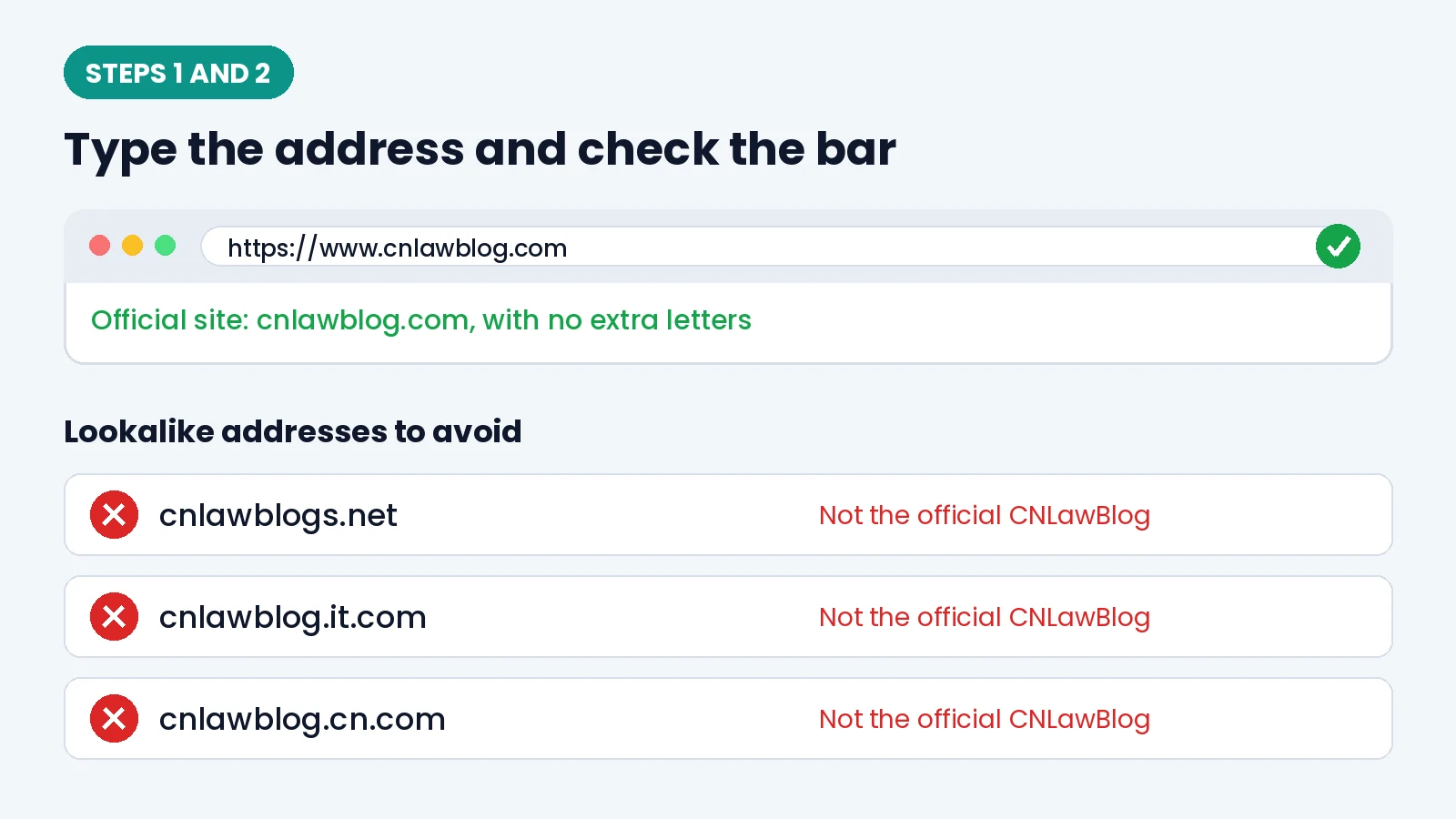
Step 1: Type the address yourself. Enter cnlawblog.com in your browser. Avoid clicking CNLawBlog links on review sites or guest post marketplaces.
Step 2: Check the address bar. It should read cnlawblog.com, with no extra s and no .net, .it.com or .cn.com ending.
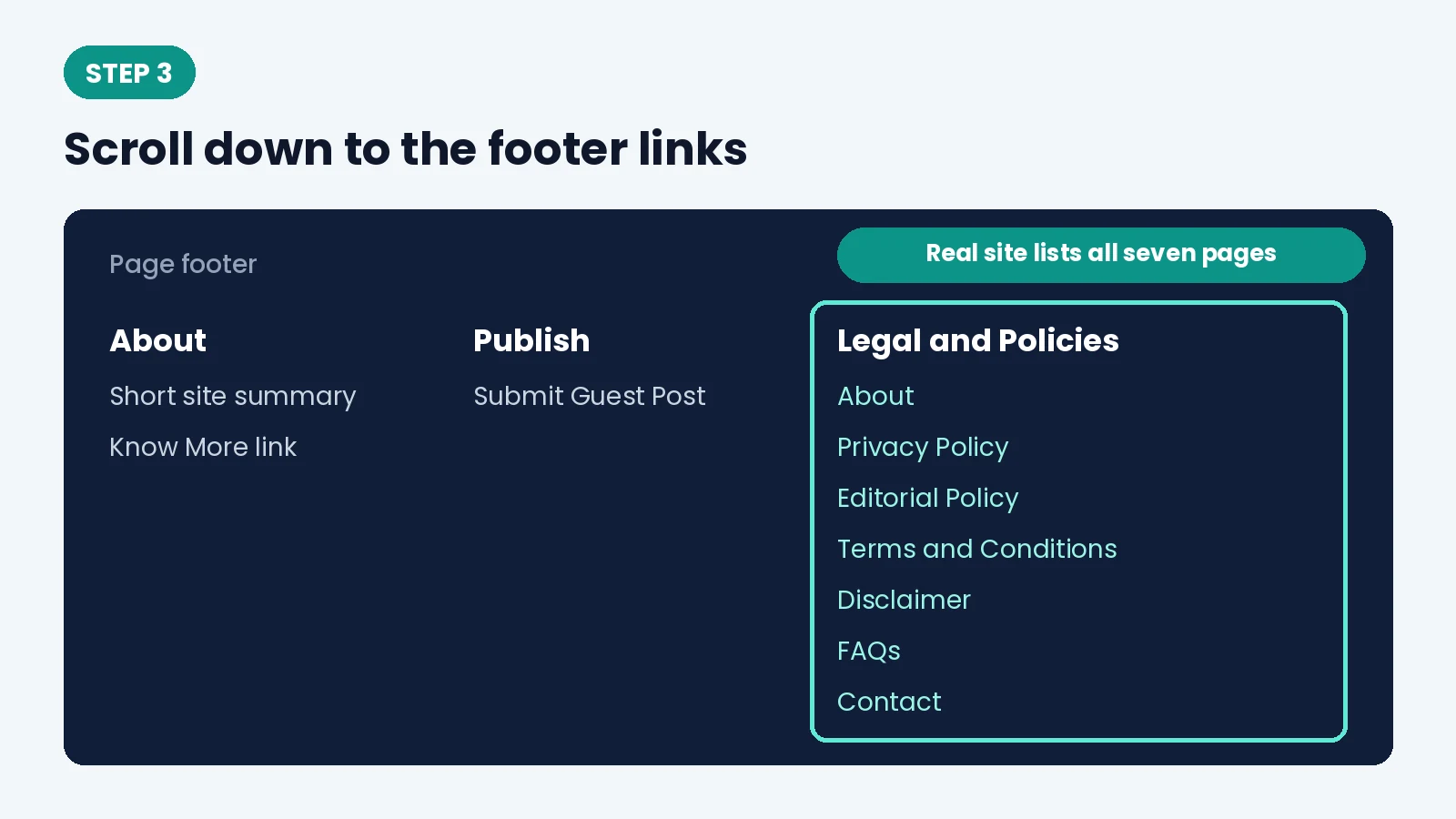
Step 3: Scroll to the footer. The real site lists seven pages under Legal and Policies: About, Privacy Policy, Editorial Policy, Terms, Disclaimer, FAQs and Contact.
How to Check a CNLawBlog Article Before You Rely on It
Use these six steps on any CNLawBlog post. They work on other legal blogs too.
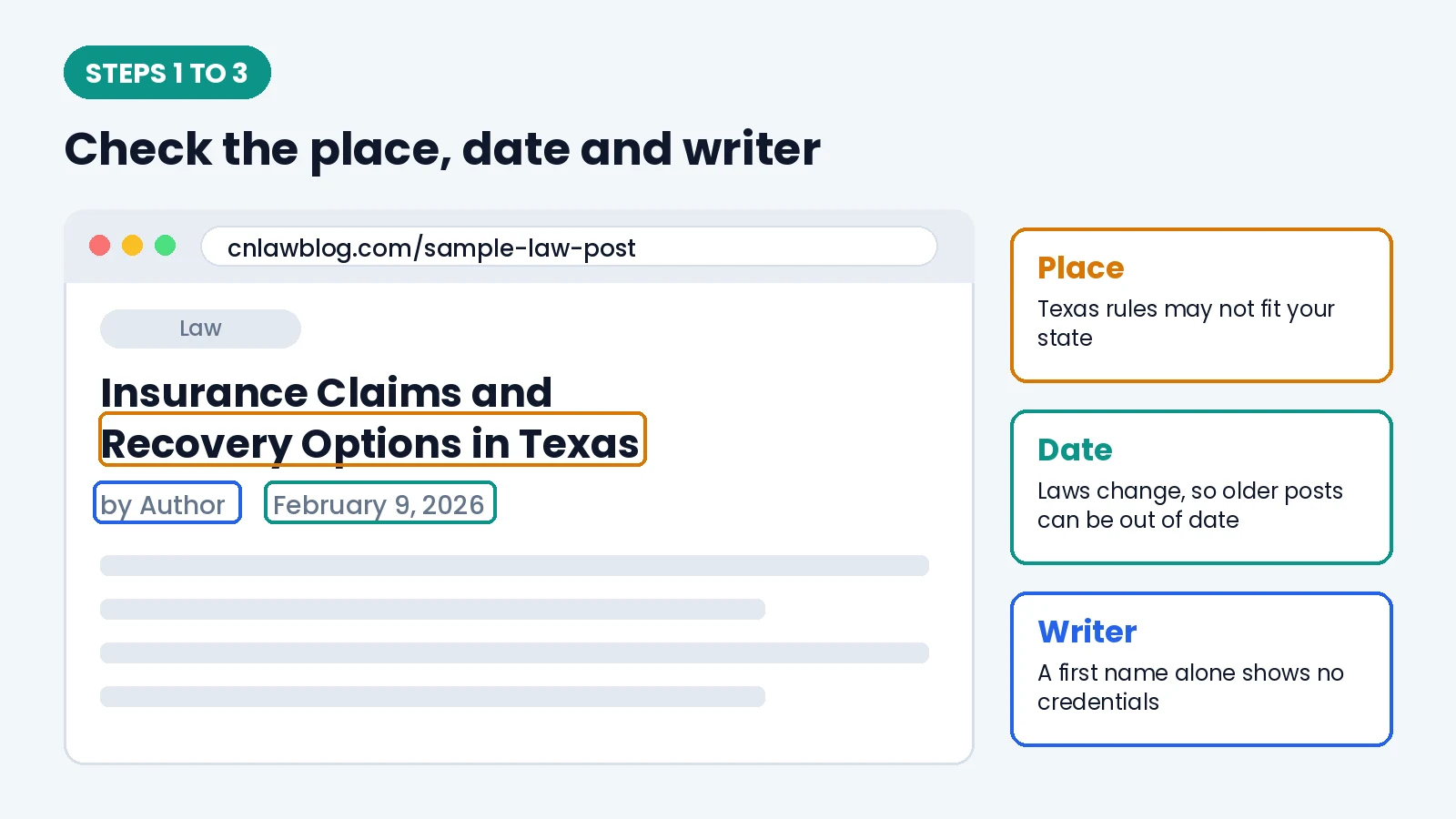
Step 1: Find the place. Look for the state or city in the title or first paragraph. A post about Texas rules may not fit your state.
Step 2: Check the date. Laws and deadlines change. An older post can describe a rule that no longer exists.
Step 3: Look at the writer. A first name with no bio tells you nothing about legal training.
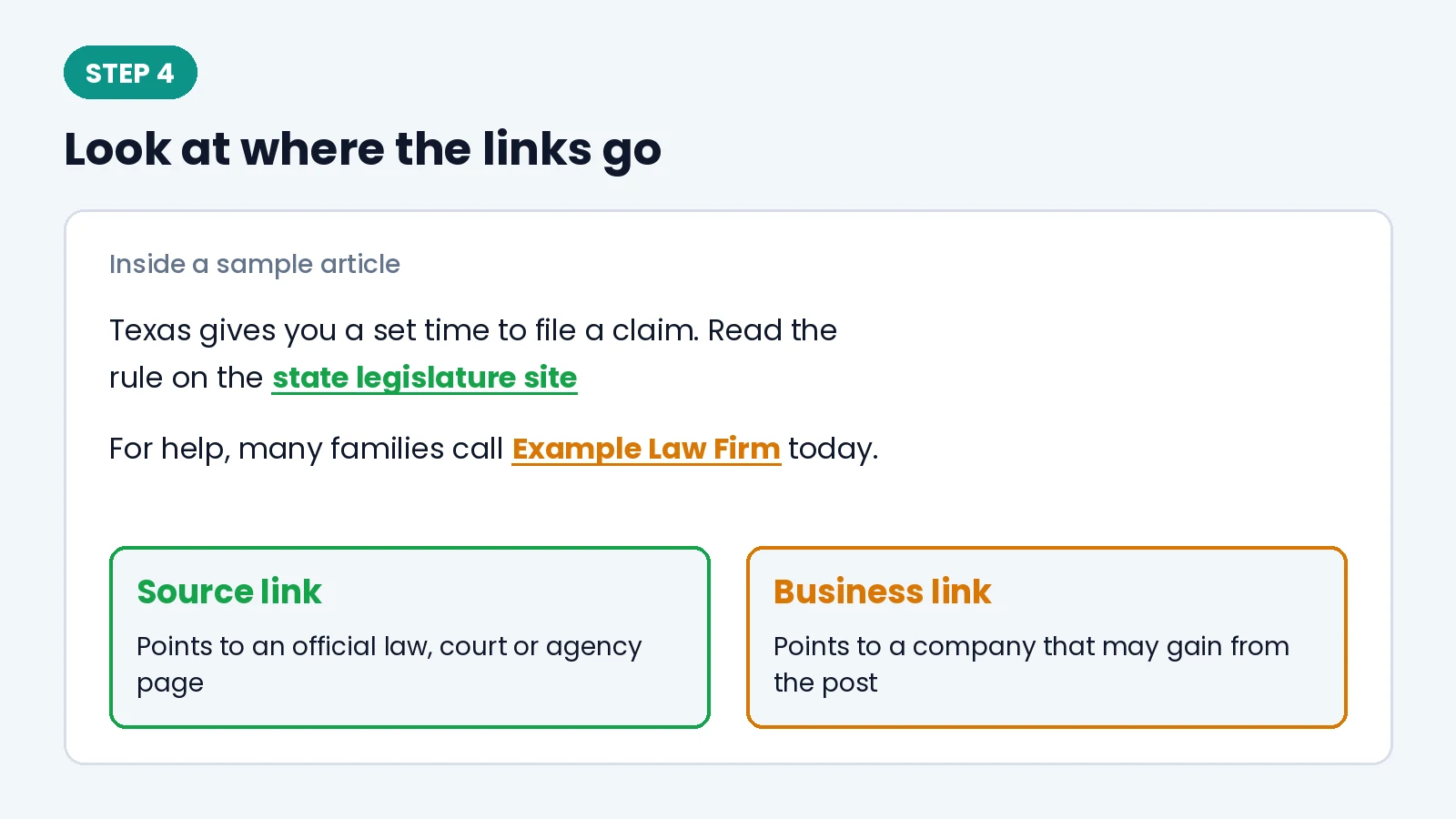
Step 4: See where the links go. A link to a state legislature or court page is a source. A link to a law firm or business may be an ad.
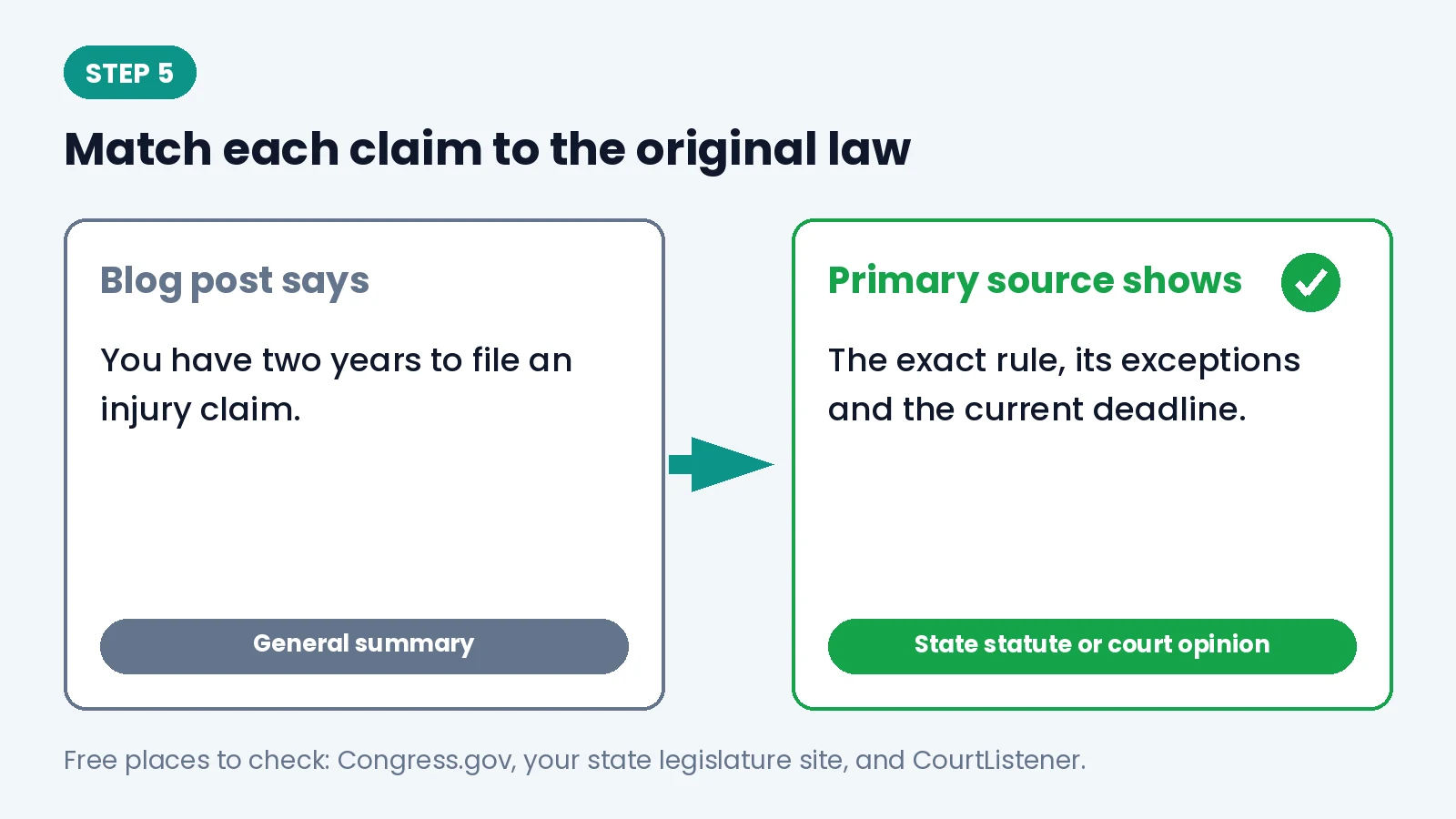
Step 5: Match each claim to the original law. Find the statute or court opinion the post talks about and read it yourself.
Step 6: Ask a licensed lawyer before you act. A blog cannot know your facts, your deadlines, or the court handling your case.
Guest Posting on CNLawBlog: What the Rules Say
CNLawBlog openly accepts guest posts. These are the rules listed on its Write for Us page in November 2026:
- At least 500 words, with 1,000 or more preferred
- Original content with clear headings
- 1 to 2 dofollow backlinks, relevant to the topic
- No affiliate links
- Submission by email, with a reply in 24 to 72 hours
The page does not say whether guest posting is free. Its FAQ says it depends on the content and asks you to get in touch.
What SEO Buyers Should Know
Google’s spam policies treat paid links that pass ranking value as link spam. Paid or sponsored links should carry a sponsored or nofollow tag. Google also flags guest post campaigns built on keyword-rich anchor text.
So if you pay for a placement anywhere, ask how the link will be tagged. A dofollow link in a paid post can hurt both sites.
What Readers Should Know
Some articles on any guest post site exist partly to carry a link. When a post recommends one company, ask who gains from that advice.
Is CNLawBlog Trustworthy?
CNLawBlog is a real, active site that works for learning basic legal terms. It is not a source to rely on for decisions about your rights, money or health.
| Points in its favor | Points that call for caution |
| Online since 2018, with a public archive | No named owner, editor or legal reviewer |
| Seven public policy pages, including an Editorial Policy | Bylines show first names only |
| A clear note that content is for information only | The Facebook, X, Instagram and LinkedIn icons in the footer all point back to the homepage |
| Free to read, with no sign-up | A law post we read promoted one firm with no sponsored label we could see |
| A correction route through its Contact page | Lookalike domains make it easy to land on the wrong site |
Our take: read CNLawBlog for a quick overview, then confirm anything important in an official source.
Better Places to Check US Legal Questions
When a question affects your case, skip the summary and go to the source. These sites are run by the government, the courts, or nonprofit legal groups.
| What you need | Where to go | Cost |
| Federal laws | Congress.gov and GovInfo | Free |
| State laws | Your state legislature’s official website | Free |
| Court opinions | CourtListener, run by the nonprofit Free Law Project | Free |
| Federal court filings | PACER | Small per-page fees, waived for light use |
| Free legal aid near you | LawHelp.org | Free |
| Quick answers from volunteer lawyers | ABA Free Legal Answers | Free, with income limits |
| Checking a lawyer’s license | Your state bar’s lawyer search | Free |
Final Thoughts
CNLawBlog is a general blog with a law section, not a legal authority. It can help you learn a term or get a quick overview of a topic. For anything with real stakes, read the original law and talk to a licensed attorney in your state. And always confirm you are on cnlawblog.com before you trust what you read.
Frequently Asked Questions
No. CNLawBlog is a blog. It does not represent clients, and reading or contacting it does not create a lawyer and client relationship.
No. China Law Blog belongs to the law firm Harris Sliwoski LLP and covers Chinese business law. CNLawBlog is an unrelated site with many topics.
No. The official address is cnlawblog.com, without the s. The .net site advertises legal services, which the real blog does not offer.
Staff posts carry short bylines such as Jamie and mansi. The site also publishes articles from outside guest writers.
Yes. Send an original article of 500 words or more by email. The site allows 1 to 2 relevant dofollow links and does not allow affiliate links.
Courts rely on statutes and case law, not blogs. For school work, ask your instructor. In both cases, cite the original law the article points to.
Leave a Reply